
Is 2026 a Good Time to Sell Your Home in Glendora, San Dimas, La Verne, or Covina?
Seller's Guide Mark and Al Team October 10, 2026
Seller's Guide Mark and Al Team October 10, 2026
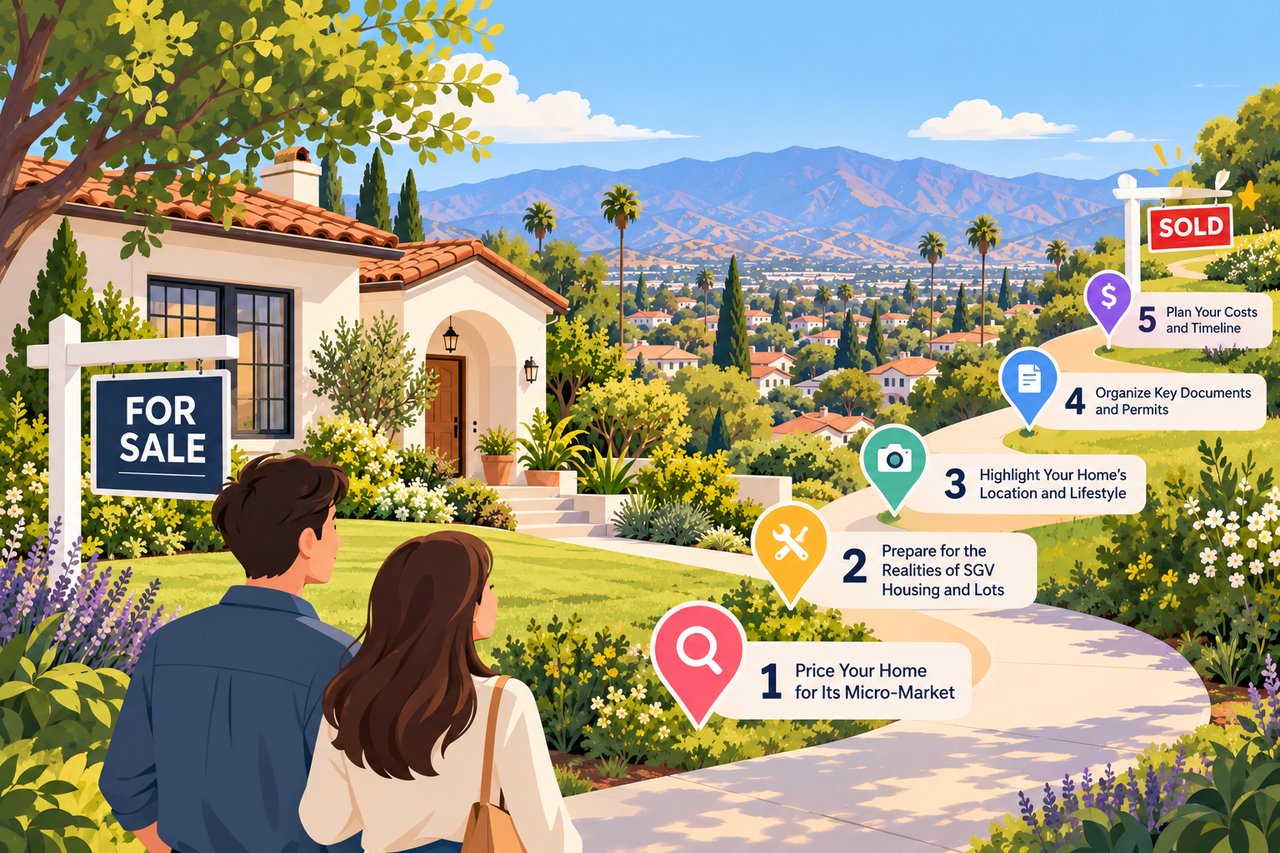
If you own a home in Glendora, San Dimas, La Verne, or Covina, you may be wondering whether 2026 is the right time to sell. Home prices remain relatively high, but mortgage rates have made buyers more cautious. Some homes are selling quickly and attracting multiple offers, while others are staying on the market longer than sellers expected.
So, should you sell now or wait until 2027?
The short answer: 2026 can still be a good time to sell, but pricing, preparation, and location matter more than ever.
Each of these San Gabriel Valley communities has its own housing market. Understanding local home prices, buyer demand, and recent sales can help you make a more confident decision.
What Does the Housing Market Look Like in Glendora and Nearby Cities in 2026?
The housing market in Glendora, San Dimas, La Verne, and Covina has changed considerably since the pandemic-era housing boom.
Back in 2020 and 2021, low mortgage rates encouraged buyers to compete aggressively for homes. Multiple offers and bidding wars became common, and many properties sold above asking price.
In 2026, buyers are taking a more careful approach. Higher mortgage rates mean larger monthly payments, so buyers are paying closer attention to a home's price, condition, and long-term value.
However, this doesn't mean the housing market has crashed.
According to the California Association of REALTORS®, the median price of an existing single-family home in Los Angeles County reached $946,950 in August 2026, representing a 1.7% increase compared with the previous year. Home sales also increased by 2.1% year over year.
These countywide numbers suggest that buyers are still active, even though affordability remains a challenge. However, they don't necessarily reflect the conditions in every individual city.
For sellers in Glendora and surrounding communities, the takeaway is simple: There is still demand for homes, but buyers are more selective about what they're willing to pay.
Home Prices Vary Across Glendora, San Dimas, La Verne, and Covina
Although Glendora, San Dimas, La Verne, and Covina are neighboring cities, their housing markets can perform quite differently. Home prices, buyer demand, and selling times vary depending on location, property condition, and available inventory.
According to Redfin, the following data covers homes sold between June and August 2026. The year-over-year changes compare median sale prices during this three-month period with the same period in 2025.
City | Median Sale Price (June–August 2026) | Price Change from 2025 |
Glendora | $939,378 | -4.7% |
San Dimas | $890,000 | -9.07% |
La Verne | $936,130 | +4.0% |
Covina | $783,482 | -2.4% |
Source: Redfin Housing Market Trends, three months ending August 2026.
For example, La Verne's median sale price increased by 4.0% compared with the same period in 2025, while San Dimas experienced a 9.07% decrease. Glendora and Covina also saw modest declines in median sale prices.
However, these changes don't necessarily mean that individual homes gained or lost the same percentage of their value. Median sale prices can also be affected by the size, condition, and types of homes sold during each period.
For homeowners considering selling in 2026, recent sales of similar properties in their neighborhood offer a more accurate starting point for determining an asking price.
How Are Mortgage Rates Affecting Homebuyers?
Mortgage rates are one of the biggest factors shaping the 2026 housing market.
Higher mortgage rates increase monthly payments and affect how much buyers can afford.
Let's say someone purchases an $800,000 home with a 20% down payment. They would need a $640,000 mortgage.
At a 6.3% interest rate, their monthly principal and interest payment would be approximately $3,961.
At a 7.4% interest rate, that payment increases to approximately $4,431.
That's about $470 more every month, without including property taxes, homeowners insurance, or other expenses.
For some buyers, higher payments mean looking for smaller homes or exploring more affordable neighborhoods. Others may choose to postpone buying altogether.
But there's another side to the story.
Many homeowners who purchased or refinanced when mortgage rates were much lower are reluctant to sell and give up their existing rates. As a result, fewer homes may become available for sale.
This creates an interesting situation: some buyers are stepping back, but some potential sellers are staying put, too.
For homeowners who decide to list, limited competition can still be an advantage.
Is There Enough Buyer Demand in Glendora and Nearby Cities?
Buyers continue to consider communities such as Glendora, San Dimas, La Verne, and Covina for their established neighborhoods, local amenities, and access to employment centers throughout Los Angeles County.
Each city offers different housing options and lifestyle advantages.
Transportation improvements may also support the area's long-term appeal. The Metro A Line extension to Pomona opened in September 2025, adding stations in Glendora, San Dimas, and La Verne.
While these improvements don't guarantee higher home prices, convenient transportation can be an attractive feature for some buyers.
The key difference in 2026 is that buyers have become more particular.
A well-maintained home with an appealing layout and a competitive asking price may still attract strong interest. A property that needs extensive repairs or is priced significantly above comparable homes may struggle to find the right buyer.
For sellers, understanding what buyers are looking for in their specific city and neighborhood can make a meaningful difference.
Writing
How Long Does It Take to Sell a Home in Glendora, San Dimas, La Verne, or Covina?
Selling a home may take longer than it did during the pandemic housing boom, but market conditions vary significantly between neighboring cities.
According to Redfin, the median time homes spent on the market during the three months ending August 2026 was approximately:
· 33 days in La Verne
· 38 days in Glendora
· 42 days in San Dimas
· 56 days in Covina
Source: Redfin Housing Market Trends, three months ending August 2026.
La Verne had the shortest median selling time among these four cities, while homes in Covina generally spent more time on the market.
These figures are citywide medians, not predictions for individual properties. Some homes may receive offers within days, while others may take several weeks or longer.
One of the biggest factors is the initial asking price.
When a home first enters the market, it typically receives attention from buyers who have been actively searching. If the price is too high, those buyers may skip the listing or wait for a reduction.
Over time, the property can lose momentum.
That's why setting a realistic price from the beginning is so important.
Rather than choosing a price based on what a neighbor sold for several years ago, homeowners should review recent comparable sales, current listings, and homes that have gone under contract.
A strong pricing strategy based on local market conditions can help attract serious buyers and avoid unnecessary delays.
How Can You Make Your Home More Attractive to Buyers?
In today's market, first impressions matter.
Because buyers are already facing high monthly mortgage payments, many prefer homes that won't require significant additional expenses immediately after moving in.
Fortunately, preparing your home for sale doesn't always mean spending thousands of dollars on renovations.
Start with a few practical improvements:
You don't necessarily need to remodel your kitchen or bathrooms before selling. Major renovations can be expensive, and there's no guarantee you'll recover the full cost.
Instead, focus on improvements that make your home feel welcoming, well-maintained, and move-in ready.
Should You Sell Now or Wait Until 2027?
This is probably the biggest question for homeowners considering a sale.
Some sellers are hoping mortgage rates will fall in 2027, making homes more affordable and encouraging more buyers to enter the market.
That could happen, but there are no guarantees.
Even if mortgage rates decline, more homeowners may decide to list their properties, increasing competition among sellers.
Waiting also comes with expenses. Property taxes, insurance, maintenance, utilities, and mortgage payments can add up over several months.
For example, if holding onto your home for another six months costs $20,000, you would need to receive more than $20,000 in additional net proceeds from a future sale just to come out ahead.
On the other hand, if you're not in a hurry to move and your home requires substantial preparation, waiting may give you more time to get everything ready.
The right decision depends on your personal circumstances.
Selling in 2026 may make sense if:
Waiting may make sense if:
Rather than trying to predict exactly where the housing market will go, focus on whether selling supports your current needs and long-term plans.
Don't Forget About Your Net Proceeds
A high sale price doesn't automatically mean you'll walk away with more money.
Before listing, it's important to understand how much you could actually receive after expenses.
These may include your remaining mortgage balance, negotiated real estate commissions, escrow and title fees, repairs, buyer concessions, and applicable taxes.
Some homeowners may qualify for a federal capital gains tax exclusion of up to $250,000, or up to $500,000 for certain married couples filing jointly, depending on their circumstances and eligibility.
A real estate professional can help you estimate selling expenses, while a qualified tax adviser can explain any potential tax implications.
Understanding your estimated net proceeds can make it easier to compare selling now with waiting.
Final Thoughts: Is 2026 a Good Time to Sell?
Yes, 2026 can still be a good time to sell your home in Glendora, San Dimas, La Verne, or Covina. But success depends on understanding your local market, setting the right price, and preparing your property to appeal to today's buyers.
Market conditions can vary significantly between these neighboring cities. That's why a personalized selling strategy based on recent local sales and neighborhood trends is more valuable than relying on broad San Gabriel Valley market predictions.
Thinking about selling your home in Glendora, San Dimas, La Verne, or Covina?
The Mark & Al Team can help you understand your home's current market value, review recent sales in your neighborhood, and develop a selling strategy tailored to your goals.
Contact The Mark & Al Team today to explore your options and take the next step with confidence.
Sources
1. California Association of REALTORS® — August 2026 Housing Market Reporthttps://www.car.org/marketdata/data/countysalesactivity
2. Freddie Mac — Primary Mortgage Market Survey https://www.freddiemac.com/pmms
3. Redfin — Glendora Housing Market https://www.redfin.com/city/7650/CA/Glendora/housing-market
4. Redfin — San Dimas Housing Market https://www.redfin.com/city/16923/CA/San-Dimas/housing-market
5. Redfin — La Verne Housing Market https://www.redfin.com/city/10417/CA/La-Verne/housing-market
6. Redfin — Covina Housing Market https://www.redfin.com/city/4367/CA/Covina/housing-market
7. IRS — Publication 523: Selling Your Home https://www.irs.gov/publications/p523
8. Metro Los Angeles — A Line Extension to Pomona https://www.metro.net/projects/foothill-extension/
Stay up to date on the latest real estate trends.
Seller's Guide
Charming Home with A Spacious Backyard in La Puente
New Listing
Custom-Built Home on One Acre in Rancho Cucamonga's Alta Loma Community
Seller's Guide
Real Estate News
What Homeowners Should Know Before the Appraiser Arrives
A Six-Unit Multifamily Investment Opportunity Near Beverly Hills
Our team is ready to handle every aspect of your transaction to facilitate the home buying, selling, commercial, or retail sale process. From the largest estate property to the first time buyer purchase, commercial real estate, and everything in between, we have the experience and knowledge to help.