Executor’s Guide To Selling A Home In Covina
July 9, 2026
July 9, 2026
Losing a loved one is hard enough without also having to figure out how to sell their home. If you are the executor of an estate in Covina, you may be dealing with court deadlines, title questions, family communication, and a long list of paperwork all at once. This guide will help you understand the basic path to selling an inherited home in Covina, what can slow the process down, and how to prepare for a smoother sale. Let’s dive in.
Before you think about pricing, cleaning, or listing the property, find out whether the home needs formal probate. In California, not every estate goes through the full probate process.
Property held in a living trust, joint tenancy property, some transfer-on-death property, and some property passing directly to a surviving spouse or domestic partner can often transfer outside formal probate. Because the rules can depend on the date of death, the type of property, and how title was held, this is the first question to answer before the home goes on the market.
Being named in a will does not always mean you can immediately sell the home. In a probate estate, the court appoints a personal representative, and that authority controls who can act for the estate.
Under California probate law, a personal representative may sell estate real property when the sale helps pay debts, taxes, or administration costs, or otherwise benefits the estate. In many probate sales, the transaction must also be reported to and confirmed by the court before title passes, unless an exception applies.
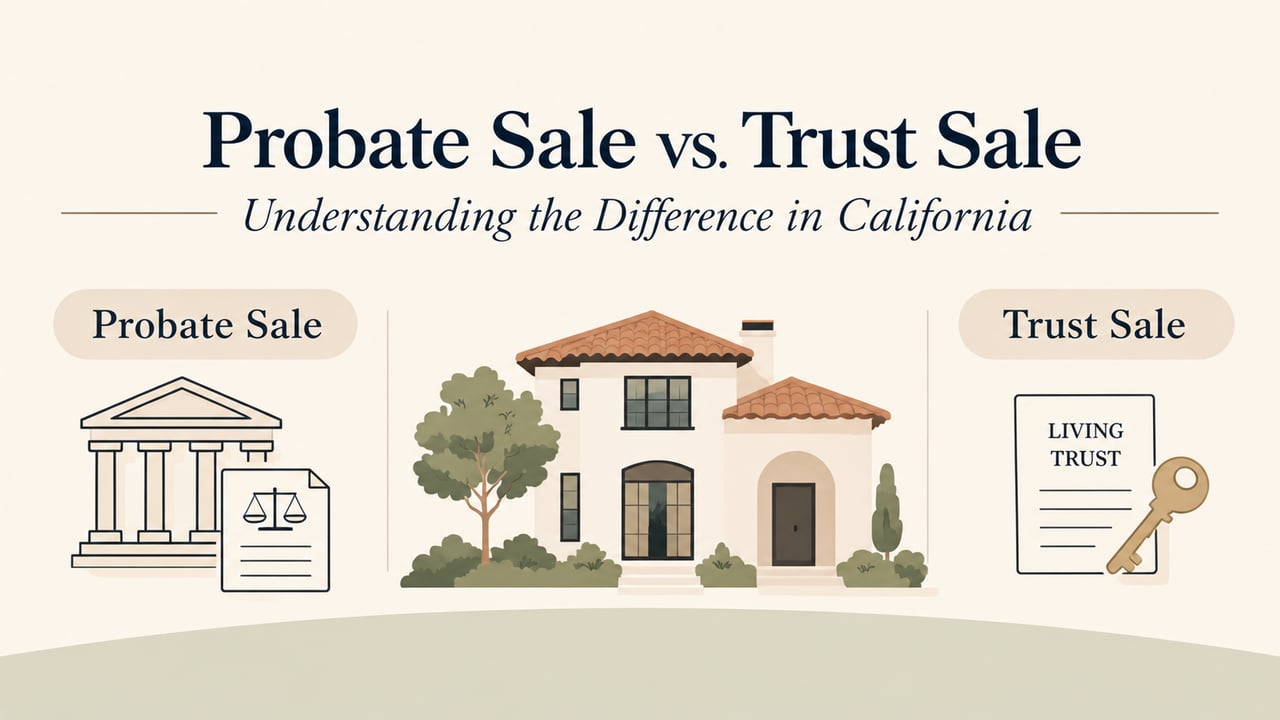
Trust sales work differently. A trustee generally has the power to sell trust property under California law, which is one reason trust sales are often less court-driven than probate sales.
Because Covina is in Los Angeles County, estate and trust sales usually involve county systems for records, recording, and taxes. That means your timeline is often shaped by county paperwork as much as by buyer demand.
Los Angeles County real estate records have been available since 1850 and can be searched or requested by the public. If you are selling an inherited home, you will usually want a clear paper trail that includes deed history, a certified death certificate, and any documents that show the executor’s or trustee’s authority.
Documents that affect a change in ownership must also meet Los Angeles County recording standards. The county requires a completed Preliminary Change of Ownership Report with documents affecting ownership changes, so recording details matter at closing.
One of the best ways to avoid delays is to collect the main documents before you list the property. Estate sales can stall when title, authority, or ownership details are still unclear.
You may need documents such as:
If the home has changed hands within the family, or if title was held in more than one way over time, getting records early can save you stress later.
Valuation in an estate sale is not always the same as a standard home sale. California Courts says estate inventory values usually begin with fair market value as of the date of death.
That date-of-death value can matter for the estate inventory and for tax basis questions. Ownership structure also matters, including whether the property was separate property, community property, joint tenancy property, or trust property.
In formal probate, the personal representative often works with a probate referee to value noncash assets. The California State Controller says probate referees provide low-cost appraisal services for estate assets, which is one reason probate timelines can stretch even before a listing turns into a completed sale.
If you have sold a home before, an estate property may move on a very different schedule. In California, formal probate is often slower than a standard resale because the process may include court appointment, inventory and appraisal steps, notices, and possible court confirmation.
California Courts says the fastest probate in California is typically about nine months. The courts also note that the personal representative usually reports back to the court about a year after appointment.
That does not mean every sale takes a year, but it does mean your listing calendar may be driven by probate milestones rather than by your preferred market timing. If the property is in a trust instead, the process is often more flexible, though authority still needs to be documented and the trustee must follow the trust terms.
Once authority and title are confirmed, the focus shifts to the property itself. Most executors want to know how much work should be done before listing.
A practical first step is to document the home’s current condition. That helps you make decisions about cleanup, repairs, and sale strategy while also creating a clearer record for the estate.
In many cases, it helps to focus on the items that improve marketability without overcomplicating the process, such as:
The right level of preparation depends on the property’s condition, the estate’s goals, and the authority available to make improvements.
Even in an estate sale, standard California disclosure rules still matter. Residential transfers are generally governed by California Civil Code section 1102.6, which covers the Real Estate Transfer Disclosure Statement.
Natural hazard disclosure may also apply when the property is in mapped hazard areas, including earthquake-fault and other natural-hazard zones. If the home was built before 1978, federal lead-based paint disclosure rules generally apply as well.
For many executors, disclosures feel intimidating because they may not have lived in the home. Even so, disclosure paperwork still needs careful attention, and it is an area where solid transaction coordination can make a major difference.
In Los Angeles County, escrow serves as the third party that receives and disburses money or documents related to the sale. That is especially important in an estate transaction, where title, authority, and recording details need to line up cleanly.
By the time you reach closing, the goal is to have a complete package that supports the transfer without last-minute surprises. If ownership documents, probate authority, or county forms are incomplete, the closing process can slow down quickly.
This is one reason estate sales benefit from steady communication between the executor, title, escrow, and any legal or tax professionals involved. The smoother the paperwork flow, the smoother the closing tends to be.
For many executors, closing day feels like the finish line. In reality, there may still be follow-up issues after the sale is complete.
Los Angeles County says a change in ownership can trigger reassessment and supplemental property tax bills. So even after escrow closes, the tax side of the transaction may still continue.
Los Angeles County also says there is no inheritance tax in California. That said, basis and estate tax questions can depend on the date of death and other facts, so keeping organized records around value and closing is important.
Selling an estate property in Covina is not just about putting a home on the market. It is about managing timing, paperwork, condition, disclosures, and communication in a process that often feels heavier than a normal sale.
An experienced local agent does not replace your attorney, accountant, or role as executor. What they can do is help coordinate pricing in the context of date-of-death value, organize property preparation, keep disclosures moving, and stay in close contact with title and escrow.
In probate sales, that also means understanding that the timeline may depend on court notices, appraisal steps, and possible confirmation requirements. In trust sales, the process is often less court-centered, but careful documentation and steady oversight still matter.
For executors in Covina, the right support can bring structure to a process that may otherwise feel overwhelming. If you need guidance on preparing, pricing, and managing an estate sale in the San Gabriel Valley, The Mark & Al Team can help you move forward with clear, experienced support.
Stay up to date on the latest real estate trends.
Real Estate Terms Explained

Seller's Guide
Charming Home with A Spacious Backyard in La Puente
New Listing
Custom-Built Home on One Acre in Rancho Cucamonga's Alta Loma Community
Seller's Guide
Our team is ready to handle every aspect of your transaction to facilitate the home buying, selling, commercial, or retail sale process. From the largest estate property to the first time buyer purchase, commercial real estate, and everything in between, we have the experience and knowledge to help.